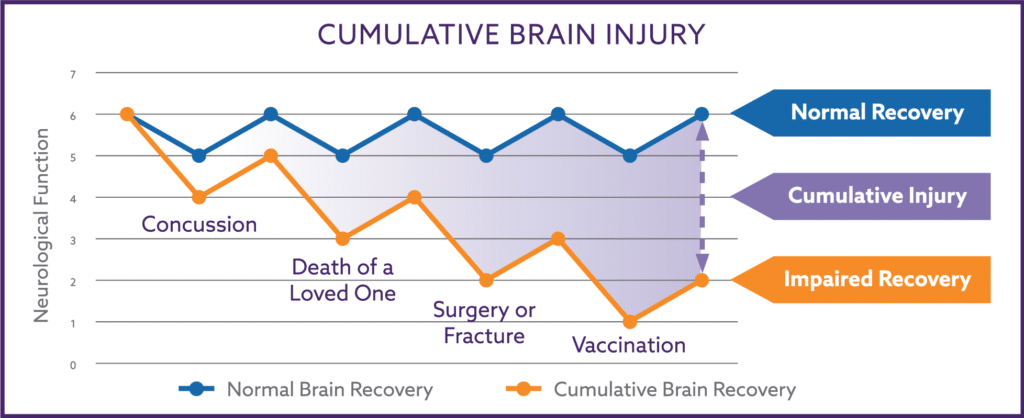
In this research update, Dr. Patrick Nemechek emphasizes a central clinical theme in his work: recovery from neurological injury is “all about inflammation.” In his framework, many people should recover from common non-bleeding brain insults—such as minor traumatic brain injury (concussion) and even “sub-concussive events”—within weeks to a couple of months if the body is functioning normally.
When recovery stalls, Dr. Nemechek’s interpretation is that the barrier is usually excessive systemic inflammation. He describes inflammatory chemicals (cytokines) circulating in the bloodstream, reaching the brain, and interfering with normal repair processes.
He also extends this inflammation-first lens beyond head injury alone, mentioning cellular damage from emotional trauma and inflammatory stressors such as surgery, major bone fractures, and COVID.
Why inflammation is the common thread in chronic neurological problems
Dr. Nemechek states that inflammation underpins a wide range of chronic neurological problems, from autism “all the way through” adult neurological issues and even Alzheimer’s disease. While Alzheimer’s research often discusses plaques and related pathology, he stresses that the scientific literature is “loaded” with inflammation findings.
From his perspective, when certain Alzheimer’s medications show benefit (even if limited), it is because they lower inflammation. He also notes that researchers are exploring repurposing cholesterol medications such as atorvastatin (Lipitor) and rosuvastatin (Crestor) for brain-related indications—again highlighting inflammation reduction as the relevant effect in his interpretation.
Why “lowering inflammation” starts with removing the source
In Dr. Nemechek’s clinical philosophy, the “best thing” is to remove what is causing inflammation in the first place, rather than only trying to artificially suppress inflammation after it is already present.
Major sources of systemic inflammation in Dr. Nemechek’s framework
1) Food-based inflammatory inputs: omega-6 oils and grain-fed meat
Diet is a “big deal” in his explanation. He highlights excessive omega-6 fatty acids found in common vegetable oils as key contributors. He also points to arachidonic acid exposure from grain-fed livestock (corn/soy feed), describing these fats as precursors to molecules that naturally “turn on” inflammation.
In this discussion, he recommends avoiding vegetable oils and avoiding grain-fed livestock. He adds that olive oil may be protective against “most of that stuff,” within the context of his dietary inflammation model.
2) Advanced glycation end products (AGEs) from high-heat cooking and processed foods
Another dietary driver he calls out is advanced glycation end products (AGEs), which increase when food is cooked “too much” (i.e., at higher temperatures). He associates higher AGE exposure with increased inflammation.
As an example, Dr. Nemechek discusses diabetes and states that blood sugars are driven by inflammation. He describes an observation: if diabetics keep the same foods and the same amount of food but cook at a lower temperature (thereby producing fewer AGEs), their blood sugars can come down—attributing the change to reduced AGE intake and reduced inflammatory load.
He also singles out processed foods and deep-fryer oil, describing repeated reheating as a setup for AGE formation.
3) Artificial sweeteners as a gut and inflammation problem
Dr. Nemechek strongly criticizes artificial sweeteners, naming sucralose (Splenda) and noting aspartame as well. In his description, these compounds damage gut bacteria, contribute to “leaky gut,” and perpetuate systemic inflammation. He frames this as a chronic, cumulative exposure: “the calories ain’t gonna kill you—the inflammation is going to kill you,” reflecting his priority on inflammation over calorie avoidance.
4) Gut bacteria overgrowth, leaky gut, and clinical realities
Beyond food inputs, Dr. Nemechek highlights bacterial overgrowth as a major source of inflammation, noting that about a third of people may have no symptoms. He mentions breath tests but describes them as “notoriously inaccurate,” estimating they can be wrong 20–30%, and says he often does not rely on them.
Because of limited testing, he describes a pragmatic clinical approach: sometimes treating suspected bacterial overgrowth even without definitive symptoms. He mentions using rifaximin (which he pronounces “refaxment”), describing it as “super safe” because it does not enter the bloodstream, and contrasts that safety profile with over-the-counter medications like Robitussin, which he says can cause psychosis—especially with fever.
Autonomic/vagus dysfunction: when the body’s “brake” on inflammation fails
Dr. Nemechek also links inflammation and recovery to the autonomic nervous system. After injuries—or even from inflammation itself—he explains that parasympathetic function may not work correctly. He specifically highlights the vagus nerve as a “natural regulator of inflammation.” In his model, if vagal function fails, inflammation can escalate because the normal braking mechanism is impaired.
He notes research suggesting that major autoimmune disorders—including psoriasis, rheumatoid arthritis, Crohn’s disease, ulcerative colitis, and ankylosing spondylitis—appear to require vagus nerve failure before these conditions “boom” into place, after which inflammation can become self-perpetuating.
COVID and the gut: a specific concern Dr. Nemechek is watching
Dr. Nemechek flags a particular post-COVID concern: it may not be “just” leaky gut. He describes an emerging pattern where COVID may create more significant disruption in the small intestine barrier—describing it as “punching holes” at a molecular level, where multiple cells are lost and a larger “rent” forms, allowing more material to flood into the immune system.
He notes this is a problem he views as similar to patterns seen in HIV, and he says he is working on approaches to address it. At the time of this update, he states he does not yet have anything he can post and is seeking more patient feedback, but he anticipates progress within a few months.
Putting it together: the recovery priority in Dr. Nemechek’s model
Across concussion/sub-concussive injury, emotional trauma, surgery, fractures, and infectious inflammatory stress, Dr. Nemechek’s core message is consistent: if you have a neurological problem, you have an inflammatory problem “first and foremost.” In his view, you have to go after the major drivers—especially food-derived inflammation, gut bacterial overgrowth/leaky gut, and autonomic (vagus) dysfunction—because persistent systemic cytokines can block brain repair.
He mentions he respects approaches people try (such as EMDR, magnets, and other modalities), but he emphasizes that meaningful progress requires addressing the major sources of inflammation “coming in the food supply,” as well as gut-driven immune activation. He also states that bacterial overgrowth can trigger a large portion of the immune system and contribute substantially to inflammatory burden.
His closing clinical assertion is direct: when inflammation is lowered, the brain can fix the injury—“damn near all of it”—reflecting his experience-based conviction about the centrality of inflammation control in neurological recovery.
Educational medical disclaimer
This article summarizes educational commentary from Dr. Patrick Nemechek’s video and reflects his clinical framework and interpretations. It is not medical advice and is not a substitute for diagnosis or individualized care. If you have persistent neurological symptoms, autoimmune disease, or post-infectious concerns, consult a licensed clinician for personalized evaluation and treatment.