Long COVID and chronic inflammation: Dr. Nemechek’s clinical framework
In this video (published June 22, 2023), Dr. Patrick Nemechek shares how he thinks about long COVID through the lens of chronic inflammation. Drawing from

In this video (published June 22, 2023), Dr. Patrick Nemechek shares how he thinks about long COVID through the lens of chronic inflammation. Drawing from
Hashimoto’s thyroiditis is an autoimmune disorder—meaning the immune system mistakenly targets the body’s own tissue rather than focusing on threats such as bacteria or viruses.
In this video (published 2021-02-21), Dr. Patrick Nemechek reviews a small pilot trial he proposes for people with persistent symptoms after COVID-19 (“long haulers”). He
Relapse after treating small intestinal bacterial overgrowth (SIBO) can be discouraging—especially when a short course of rifaximin leads to noticeable improvement, only for symptoms to
Note: This article is a human-review proposal based solely on the provided video transcript of Dr. Patrick Nemechek’s discussion. It summarizes his comments and interpretations
Many people can point to a single “big event” that changed their health—an accident, a major illness, or a severe concussion. But in Dr. Patrick
In this video (published March 22, 2018), Dr. Patrick Nemechek discusses a pattern he commonly sees in practice: people with bacterial overgrowth (SIBO) who notice
In this video, Dr. Patrick Nemechek (inventor of the Nemechek Protocol™) explains how he thinks about bacterial overgrowth and why he uses inulin in some
A common question Dr. Patrick Nemechek hears is: how can you know how to treat small intestinal bacterial overgrowth (SIBO) if you don’t do a
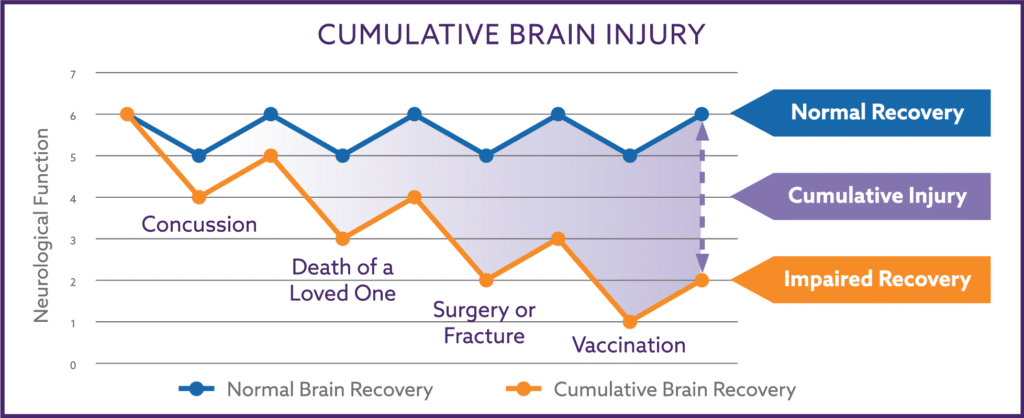
Why do some people recover from concussions and other brain “hits,” while others seem to stay stuck for years? In this video, Dr. Patrick Nemechek
In clinic, Dr. Patrick Nemechek says it’s common for families to come in to discuss a child’s concerns (such as ADHD) and then, near the
Educational medical disclaimer: This article summarizes a clinical discussion by Dr. Patrick Nemechek and is for general education only. It is not medical advice. Vaccination
Many people start treatment for small intestinal bacterial overgrowth (SIBO) expecting a one-time “cure.” In this video, Dr. Patrick Nemechek emphasizes a different way to
In this video, Dr. Patrick Nemechek discusses his general clinical approach to using rifaximin in adults as part of his broader framework for microbiome management
Dr. Patrick Nemechek uses the term “SIBO fingerprint” to describe a practical, patient-specific pattern: the particular symptoms that improve when you treat small intestinal bacterial
Many patients and parents have been taught that you must “prove” a condition with a test before you can treat it. In this talk, Dr.
Emotional trauma is often discussed as a psychological experience—but in Dr. Patrick Nemechek’s clinical framework, intense and intensely negative emotional events can also create a
Publication date: 2024-09-15 In this research update, Dr. Patrick Nemechek discusses a pattern he has been watching since SARS-CoV-2 (COVID) emerged: some patients develop a
In this science review, Dr. Patrick Nemechek (inventor of The Nemechek Protocol™ for autonomic dysfunction, autism, and developmental disorders) describes inflammation through the lens of
Hemoglobin A1C (often shortened to “A1C”) is one of the simplest blood tests in modern medicine—yet it’s frequently misunderstood, especially when the result falls into
Want to Learn More About POTS and Autonomic Dysfunction? Download Dr. Nemechek’s free POTS/PANS/PANDAS eBook for a deeper explanation of autonomic dysfunction, inflammation, and recovery.
In this scientific review, Dr. Patrick Nemechek of Nemechek Autonomic Medicine (inventor of The Nemechek Protocol™) describes a clinical framework in which chronic depression is
In this clinical overview, Dr. Patrick Nemechek discusses how he uses rifaximin (spoken as “raxin/refax”) to help reduce inflammation that he believes is commonly driven
Many people associate stroke recovery with regaining movement or speech through rehabilitation. In Dr. Patrick Nemechek’s clinical view, that focus often misses a large part