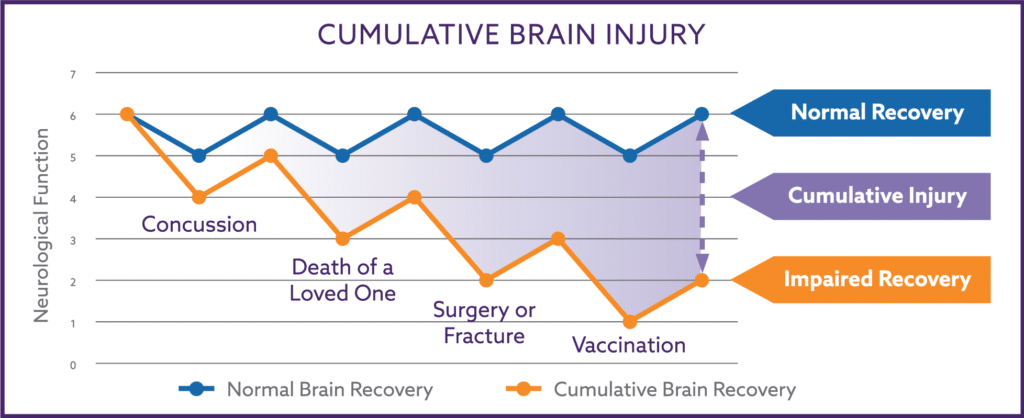
Parents of children with autism sometimes see a sudden, dramatic worsening of behavior that seems to come “out of nowhere.” Dr. Patrick Nemechek describes this as a common and understandably frightening pattern—especially when a child who was doing relatively well suddenly becomes much more dysregulated.
In the clinical framework he discusses, these episodes often align with an acute illness such as a middle ear infection, viral infection, or sinus infection. The behavior changes can look like “regression,” but Dr. Nemechek emphasizes that this is typically temporary—not a permanent loss of skills—because the child is temporarily unable to access skills the way they usually can.
What these episodes often look like
Dr. Nemechek describes a cluster of changes that may appear during illness-related episodes in children with autism. In his description, parents may notice:
- Sudden worsening of social, emotional, and behavioral functioning
- Difficulty focusing or thinking clearly (he compares it to an intense episode of attention deficit symptoms)
- More hyperactivity, anxiety, OCD-type behaviors, stimming, aggression, tantrums, and increased difficulty with transitions
- Sleep disruption
- Cravings for salt, carbs, and water
- Physical complaints such as headaches or tight neck muscles
He notes that a small minority of children may seem to do better when they get sick, and he considers that observation “real,” but says that the vast majority become worse during these episodes.
A clinical observation now described in the literature
Dr. Nemechek says he has observed this illness-associated behavioral shift for a long time in clinical practice. In the video, he references a paper he found that documents a similar pattern by following children with autism and comparing them with children without autism. As he summarizes it, the study included 141 children with autism and described episodes where sudden worsening of behavior coincided with fever or other illness symptoms, affecting social, emotional, and behavioral domains, along with some somatic (physical) symptoms.
In his telling, only three children in that autism group were reported as doing better during illness, while most worsened.
Dr. Nemechek’s proposed mechanism: autonomic nervous system fragility and low brain perfusion
Dr. Nemechek explains these episodes through the lens of autonomic nervous system (ANS) function. He describes the ANS as a “master regulator” of physiology—affecting processes such as blood pressure regulation, hormones, metabolism, immune activity, and emotions. He also highlights that the ANS has two broad “branches”: the sympathetic and parasympathetic systems.
In his clinical interpretation, children with autism commonly have significant ANS dysfunction, and he says there is literature supporting autonomic problems in autism (though he notes it can be difficult for non-specialists to interpret due to technical language). He further suggests that, in autism, there is a potential for a chemical injury related to propionic acid released with bacteria, adding that more work is needed in that area.
From there, he describes a core downstream issue: difficulty maintaining adequate blood pressure to the head during stressors. In the simplified phrasing he uses for families, this can be thought of as “low brain blood pressure.” He also provides the more technical term: cerebral hypoperfusion.
In his explanation, when blood pressure to the brain drops, oxygen delivery becomes harder, the brain does not function normally, and the child may appear to “panic” behaviorally. He also notes that adults can experience similar patterns during infections (for example, sinus infections), when carefully interviewed.
Why it can look like regression (but usually isn’t)
Dr. Nemechek emphasizes that these episodes can mimic regression. In the framework he presents, the child has not “wiped out any gains.” Instead, the gains are temporarily harder to see because attention and cognitive function are impaired during the period of reduced cerebral perfusion.
He also describes compensatory behaviors that may emerge as the body tries to raise blood pressure to the head. For example, increased movement (hyperactivity) can increase blood pressure by activating muscles. Alternatively, the child may want to lie flat, which can help increase blood pressure to the head by reducing the effect of gravity. In this same context, he links cravings for salt, carbs, and water to attempts to support blood pressure.
Common triggers Dr. Nemechek highlights
In his description, the ANS in children with autism can be “fragile,” and stressors may exacerbate symptoms. He lists a range of possible triggers, including:
- Infections (such as middle ear infections, viral infections, sinus infections)
- Constipation
- Sunlight or heat
- Social stress
What he suggests parents do in the moment
Dr. Nemechek’s first practical recommendation is straightforward: if there is a sudden behavioral worsening and you notice possible illness symptoms, get the child checked—particularly to evaluate for a middle ear infection, where antibiotics may be needed.
For symptoms consistent with a runny nose or sinus involvement, he mentions that fluticasone nasal spray (brand name he references: Flonase) can open the sinuses and, in his experience, can sometimes help clear the infection within days—after which behavior may return to baseline.
Medical disclaimer
This article summarizes a clinical explanation presented by Dr. Patrick Nemechek in a video and is for educational purposes only. It is not medical advice and is not a substitute for diagnosis or treatment from your child’s clinician. Sudden behavioral changes—especially with fever or suspected infection—should be discussed with a qualified healthcare professional.