Hashimoto’s thyroiditis is an autoimmune disorder—meaning the immune system mistakenly targets the body’s own tissue rather than focusing on threats such as bacteria or viruses. In Hashimoto’s, the targeted tissue is the thyroid gland.
In this clinical review, Dr. Patrick Nemechek discusses how autoimmune disorders are commonly thought to involve a genetic predisposition that may be “switched on” when inflammation rises high enough. He also describes a framework in which autonomic function—especially vagus nerve regulation of inflammation—matters in how autoimmune conditions can emerge and, in some cases, quiet down again.
Important note: This article summarizes Dr. Nemechek’s discussion and clinical observations from the video. It is educational and not a substitute for individualized medical care, diagnosis, or treatment.
What Hashimoto’s is, and how it fits into autoimmune disease
Dr. Nemechek defines autoimmune disorders as conditions where the immune system mis-targets tissue in the body. He gives examples of other autoimmune diseases by location—such as rheumatoid arthritis (joints) and Crohn’s disease (mostly small intestine)—and contrasts them with Hashimoto’s thyroiditis, which involves the thyroid gland.
He then describes the “general thinking” about autoimmune disorders: a person may carry a genetic predisposition, and when inflammation rises high enough it can effectively flip that predisposition “on,” contributing to the autoimmune process.
Inflammation, autonomic disruption, and the vagus nerve (as described in the video)
In Dr. Nemechek’s explanation, inflammation and autonomic function can interact. He notes that they have shown, in what he calls “the five biggies” (psoriasis, rheumatoid arthritis, Crohn’s, ulcerative colitis, and ankylosing spondylitis), that the vagus nerve—which he describes as regulating inflammation—has to fail before those autoimmune disorders develop.
In the framework he outlines:
- Inflammation begins to rise.
- That inflammation disrupts autonomic functioning.
- The vagus nerve no longer controls inflammation correctly.
- Inflammation can then jump higher—high enough to potentially trigger (turn on) autoimmune-related genes in susceptible individuals.
He also states that when inflammation is lowered, those genes can be turned off, and he mentions seeing this in clinical practice—particularly with Hashimoto’s thyroiditis.
Clinical observations: antibody levels and thyroid hormone needs changing
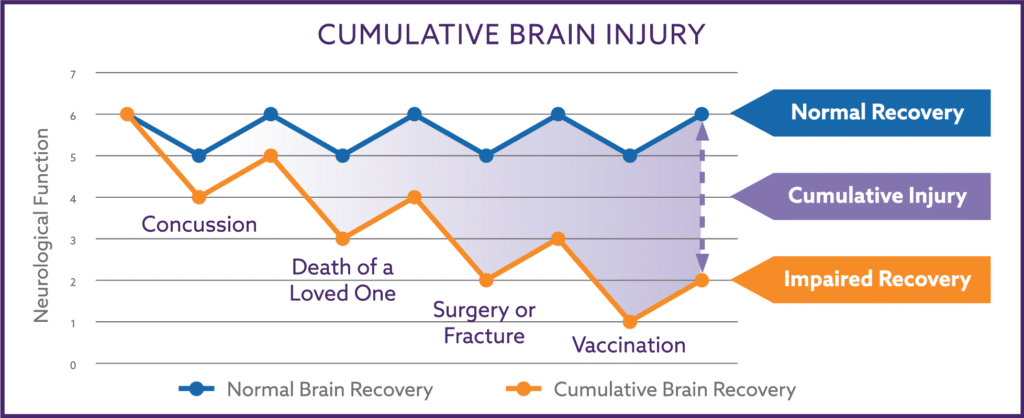
Dr. Nemechek describes a clinical pattern he has observed in his practice. He explains that some patients initially come to his clinic for neurological recovery after what he refers to as an autonomic “brain injury” and autonomic dysfunction. They are placed on his protocol intended to support neurological recovery.
As he tells it, while patients are noticing neurological improvement, some then report feedback from their endocrinologist: the endocrinologist reduces the patient’s thyroid hormone dose because it appears they “don’t need so much thyroid hormone” anymore. Dr. Nemechek notes that he has learned to ask specifically about Hashimoto antibody levels—and patients report that their antibody levels are coming down.
He further states he has seen “many patients” where they report being off all thyroid hormone and having autoimmune antibodies reach zero, describing the condition as having “went away” and “stops.” In his interpretation, this supports the idea that elevated inflammation can turn autoimmune processes on, and that lowering inflammation can turn them off.
Thyroid recovery capacity (as described by Dr. Nemechek)
A common concern patients raise, Dr. Nemechek says, is whether the thyroid is too damaged to recover. He counters this with his clinical viewpoint that the thyroid has a “tremendous capacity to recover and grow.” As a visual example of thyroid growth capacity, he references goiters, describing how some people develop “gigantic thyroids.”
Within his discussion, the implication is that if autoimmune activity quiets down and inflammation is better controlled, the thyroid may be capable of regaining function—something he says he sees in practice.
Why he emphasizes lowering inflammation beyond thyroid labs
Dr. Nemechek closes with a broader warning: even if thyroid hormone replacement can address thyroid-related symptoms or lab findings, the “driving inflammation” behind the autoimmune process may still be present. In his view, that underlying inflammation is a central problem that needs attention.
He states that inflammation can trigger “80 plus percent” of cancers, diabetes, heart attacks, and strokes, and that it drives conditions such as Alzheimer’s, attention deficit disorder, and chronic depression. His takeaway is that focusing only on thyroid replacement may help a “little issue,” but not address the larger, systemic risks he attributes to chronic inflammation.
What Dr. Nemechek says his protocol includes (context from the video)
In the context of treating autonomic dysfunction and supporting neurological recovery in his clinic, Dr. Nemechek lists components of the protocol he uses:
- Fish oil
- Olive oil
- Rifaximin (he references the brand name “Xifaxan”)
- Daily vagus nerve stimulation
He connects the observed Hashimoto-related changes (reduced thyroid hormone requirements and decreasing antibody levels) to patients who were on this protocol, framing the results as consistent with lowering inflammation and improving inflammation regulation.
Medical disclaimer
This content is for general education only and summarizes a single clinician’s discussion and observations. It does not establish what will happen for any individual and is not medical advice. If you have Hashimoto’s thyroiditis or concerns about thyroid hormone dosing or antibody levels, work with your licensed clinician (such as an endocrinologist) before making any changes to evaluation or treatment.